
Your HVAC Resource Hub
Straight answers on heating, cooling, and air quality — from the team at Markl & Sons.
Welcome to the Markl & Sons AC Help Center — a free knowledge resource for homeowners and business owners in the Denison, TX area. Here you'll find clear explanations of how HVAC systems work, practical guidance on evaluating contractors, and actionable tips to reduce your energy costs. Everything is written for general homeowners, not industry insiders.
After exploring these resources, if you have specific questions or are ready to schedule service, the Markl & Sons team is just a call or message away. We're happy to help.
How to Select a Reputable HVAC Contractor
Choosing the wrong HVAC contractor can result in improper installation, voided equipment warranties, and potentially unsafe operating conditions in your home or business. Markl & Sons meets every standard listed below — we believe transparency starts before the first appointment.
- State License & Insurance — Verify the contractor holds a valid Texas HVAC license and carries liability insurance and workers' comp.
- Manufacturer Certifications — Look for factory-authorized or NATE-certified technicians who are trained on the equipment they install.
- Written Estimates — A reputable contractor provides a detailed written quote before any work begins — no verbal-only pricing.
- References & Reviews — Ask for local references and check online reviews on Google or the BBB for consistent service quality.
- Permit Compliance — All new installs and major replacements should be permitted and inspected per Texas code — ask if the contractor handles permits.
- Clear Warranty Terms — Understand both the equipment manufacturer warranty and the labor warranty the contractor provides.
Why Choose Markl & Sons?
Markl & Sons is fully licensed and insured in Texas, employing certified technicians trained on the equipment we install. We provide written estimates with no hidden fees before work begins, and we handle permit compliance so you don't have to. Our team has built a reputation for prompt, quality service across residential and commercial customers in the Denison area — and we stand behind every job with clear warranty terms.
Energy Saving Tips for Your HVAC System
Small habits and smart upgrades can meaningfully reduce your heating and cooling bills without sacrificing comfort.
Change Your Air Filter Regularly
A clogged filter forces your system to work harder. Check monthly and replace every 1–3 months depending on use and household conditions.
Use a Programmable or Smart Thermostat
Set your thermostat to reduce heating and cooling when you're away or asleep. Even small setbacks add up to significant annual savings.
Seal Air Leaks Around Doors and Windows
Gaps and cracks let conditioned air escape. Use weatherstripping or caulk to seal leaks and keep your system from overworking.
Schedule Annual Maintenance
A professionally tuned system runs more efficiently and is less likely to fail during peak demand. Spring and fall tune-ups are ideal.
Keep Vents Clear and Unobstructed
Furniture, rugs, or boxes blocking supply and return vents disrupt airflow balance and force your system to compensate.
Use Ceiling Fans to Assist Airflow
Fans help distribute conditioned air more evenly, allowing you to raise the thermostat setpoint in summer without discomfort.
Shade Your Outdoor Unit
Planting shade trees or using a shade structure near the outdoor condenser can reduce heat load and improve efficiency during hot Texas summers.
Consider a Zoned System
Only condition the areas you use. Zoned comfort control eliminates waste in unoccupied rooms and is especially effective in larger homes.
HVAC Terminology Glossary
Understanding the language your technician uses helps you make better decisions about your home's comfort system.
SEER — Seasonal Energy Efficiency Ratio. Measures the cooling efficiency of an AC unit over a full season; higher SEER means lower operating costs.
AFUE — Annual Fuel Utilization Efficiency. Rates how efficiently a furnace converts fuel to heat; an 80% AFUE furnace uses 80 cents of every dollar of fuel.
HVAC — Heating, Ventilation, and Air Conditioning. The full system that controls indoor temperature, humidity, and air quality.
Refrigerant — The chemical compound that absorbs and releases heat to move it between indoors and outdoors. Common types include R-22 (being phased out) and R-410A.
Heat Exchanger — The component in a furnace that transfers heat from combustion gases to the air supply without mixing the two — a cracked heat exchanger is a safety hazard.
AHU (Air Handler Unit) — The indoor component of a split HVAC system that circulates air across the evaporator coil and distributes it through ductwork.
Evaporator Coil — Located indoors, this coil absorbs heat from indoor air using refrigerant, cooling and dehumidifying the air before it returns to the space.
Condenser Coil — Located in the outdoor unit, this coil releases the heat absorbed from indoors to the outside air.
Zoning — A system that divides a building into independently controlled temperature areas using dampers and multiple thermostats for greater efficiency and comfort.
MERV Rating — Minimum Efficiency Reporting Value. Rates a filter's ability to capture airborne particles; higher MERV = finer filtration, but too high can restrict airflow on standard systems.
BTU — British Thermal Unit. The measure of heating or cooling capacity; a system's BTU rating indicates how much heat it can add or remove per hour.
Heat Pump — A system that moves heat rather than generating it — pulling heat from outdoor air (even in cold weather) to warm a space, and reversing the process for cooling.
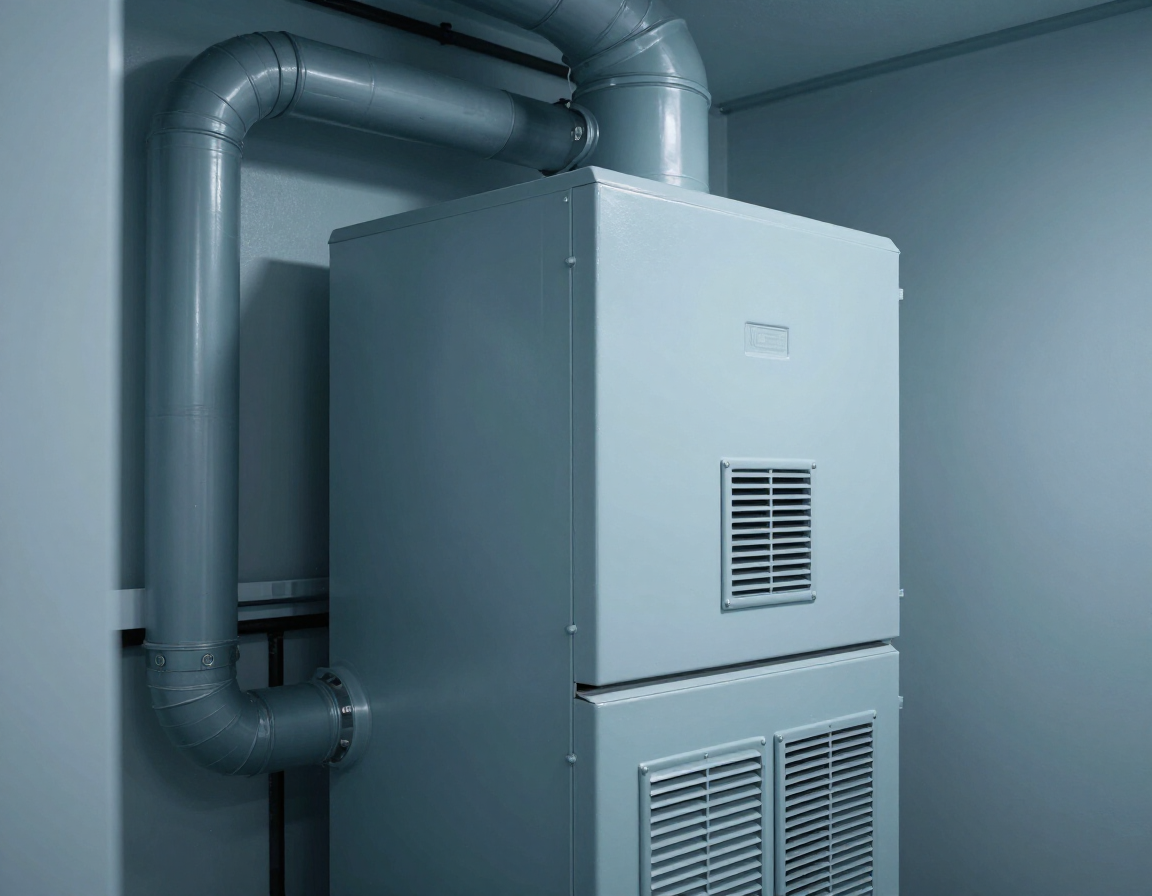
How Central Heating Works
Central heating systems use a furnace or air handler to warm air and distribute it throughout a building via a network of supply and return ducts. The thermostat acts as the system's brain — calling for heat when the indoor temperature drops below the set point.
- The thermostat calls for heat. When indoor temperature falls below the set point, the thermostat sends a signal to the furnace.
- The burner ignites. In a gas furnace, the burner fires and heats the heat exchanger. In an electric system, resistance coils heat up instead.
- The blower fan activates. A blower motor pushes indoor air across the hot heat exchanger, warming it without exposing it to combustion gases.
- Warm air is distributed. The heated air travels through supply ducts to registers throughout the home, while cooler return air is drawn back to restart the cycle.
- The system cycles off. Once the thermostat's set point is reached, the furnace shuts off and the fan runs briefly to clear residual heat from the ducts.
Regular maintenance — including filter changes, annual burner cleaning, and heat exchanger inspections — keeps central heating systems running safely and efficiently through Texas winters.
How Heat Pump Systems Work
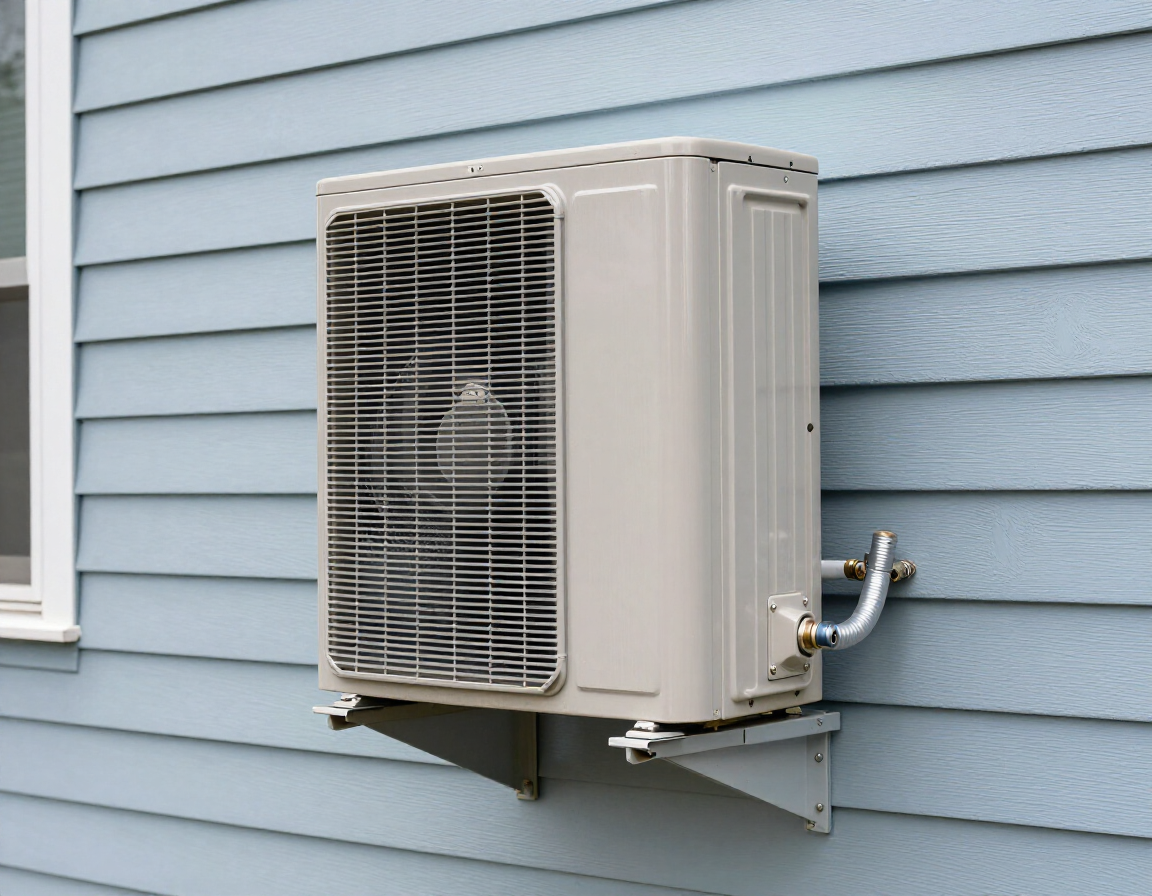
Heat pumps are among the most efficient comfort systems available — instead of burning fuel to create heat, they move heat from one place to another. In heating mode, a heat pump extracts heat energy from outdoor air (even in cool weather) and transfers it indoors. In cooling mode, the process reverses, functioning exactly like a central air conditioner.
- Why heat pumps are efficient: Because they move heat rather than generate it, heat pumps can deliver two to three times more heating energy than the electrical energy they consume — making them significantly cheaper to operate than electric resistance heating in mild to moderate climates like North Texas.
- When a heat pump is the right choice: Heat pumps work best in climates where temperatures rarely drop below freezing for extended periods. For Denison, TX homeowners, a heat pump can handle both heating and cooling needs in most conditions, with supplemental heating available for occasional hard freezes.
Markl & Sons can evaluate your home's layout, insulation level, and existing ductwork to recommend whether a heat pump system is the right investment for your comfort and energy budget.
Still Have Questions? We're Here to Help.
The Markl & Sons team is ready to answer your HVAC questions, diagnose a problem, or schedule service at your home or business in the Denison, TX area. Reach out today — there's no obligation, just straight answers from an experienced local team.